NASA’s November guide points U.S. skywatchers toward meteor mornings and a November 24 supermoon
U.S. skywatchers planning an evening or early-morning outing have several dates to check in NASA’s newly released November guide: Taurid meteors early in the month, Mars near Jupiter in mid-month, and a full supermoon on November 24. Clear skies and a dark location will matter more than a packed observing schedule.
Dates for November observing
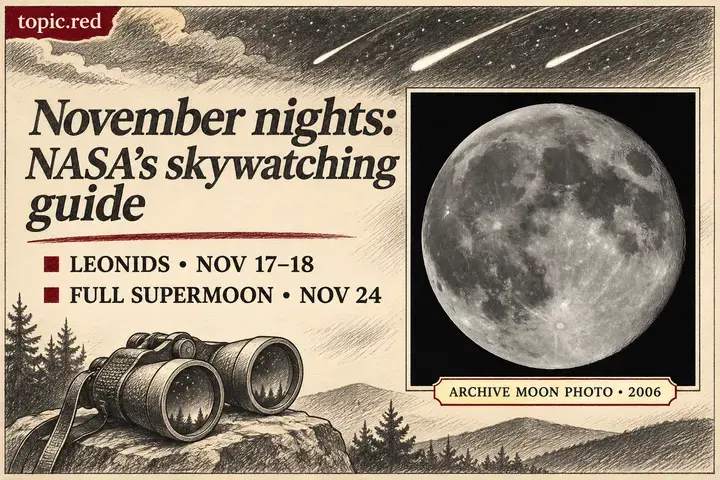
- NASA’s November 2 guide recommends the mornings of November 17–18, after moonset, for watching the Leonids.
- Mars and Jupiter are expected to appear about 1.2 degrees apart before sunrise on November 15–16.
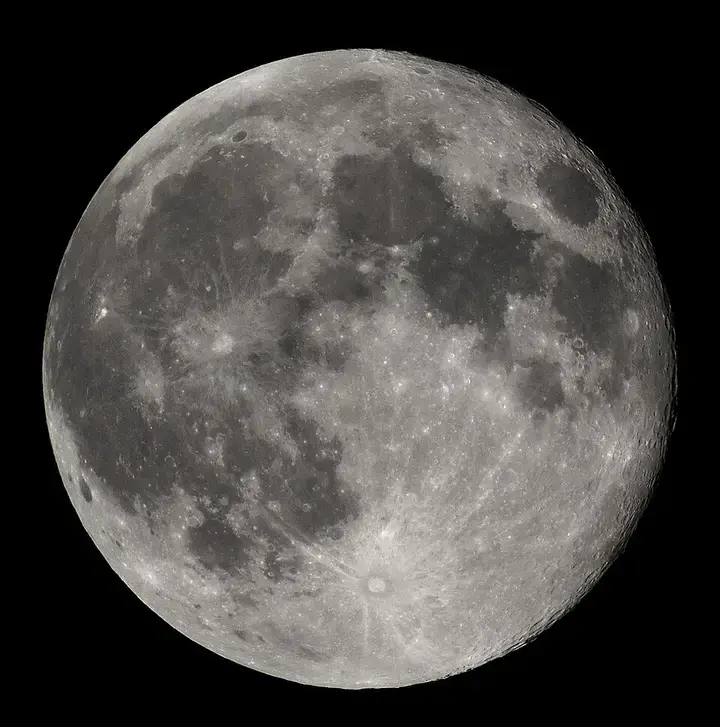
- The full Moon on November 24 is described as the first of three consecutive supermoons; the apparent size difference can be subtle.
News date: 3 November 2026 / Facts checked: 3 November 2026
Plan around darkness and your local horizon
The guide places the Southern Taurid peak around November 5 and the Northern Taurid peak around November 12. These showers can produce occasional bright fireballs, but they are not a promise of a meteor storm.
For an outing in the United States, check local cloud cover and moonset before leaving. NASA advises finding a dark location, allowing about half an hour for eyes to adapt, and looking across a broad part of the sky. Its general Leonid guidance also recommends preparing for cold overnight conditions.
For a local U.S. connection, NASA’s Night Sky Network offers a directory and event calendar covering more than 400 astronomy clubs. Its November webinar is scheduled for November 4 at 6 p.m. Pacific Time, or 9 p.m. Eastern, with Jeffrey Hayes discussing Voyager discoveries.
A close pairing in the sky, not in space
On November 15–16, the monthly guide directs observers southeast before sunrise for Mars and Jupiter. Their apparent separation is a viewing angle from Earth; it does not mean the planets are physically close together.
For the November 24 full Moon, NASA suggests watching it rise in the east around sunset. A Moon near the horizon can look especially large because of the Moon illusion, an effect that also occurs with ordinary full Moons. This article follows the new monthly guide’s observing dates and does not promise a particular meteor count.